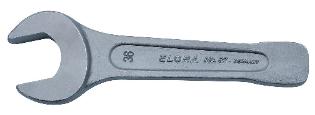
Open end slugging wrenches are heavy-duty striking tools for large nuts and bolts when a conventional wrench does not provide the needed impact capability. The open jaw is useful where a fastener cannot be accessed from the end, while the reinforced striking end is designed to receive blows from a suitable hammer or mallet. The following are examples of industries and maintenance settings where this type of wrench may be useful.
Oil Rigs, Oil & Gas, and Refineries
Large flange fasteners, pipeline connections, valves and process equipment can require heavy-duty fastening or breakaway tools during installation, shutdowns and maintenance. Applications include oil platforms, refineries and petrochemical facilities.
Cranes and Heavy Equipment
Construction machinery, cranes, lifting equipment, excavators, loaders and other heavy machines contain large structural and mechanical fasteners. A correctly sized slugging wrench may be useful for selected assembly, repair or removal work where the equipment procedure permits impact tools.
Wind Turbines and Power Generation
Wind-energy and generating facilities have large bolted connections in tower sections, foundations, platforms and machinery assemblies. In some wind-turbine bolting tasks, a slogging wrench is used to hold the bolt head while a specified torque wrench or tensioner applies the required final load.
Bridges and Structural Steel
Bridge structures, steel frames, support structures and other infrastructure projects use large anchor bolts and structural connections. An open end slugging wrench may suit selected fastener access and maintenance steps when the project engineer's bolting procedure specifically allows it.
Trains, Railways and Transit
Railway workshops, rolling-stock maintenance, rail equipment and heavy transit machinery involve robust mechanical and structural fasteners. Industrial tool suppliers list railway and rail-transit maintenance among the application areas for open end slugging wrenches.
Shipyards, Ports and Cargo Handling
Shipbuilding, offshore engineering, port machinery, cargo-handling equipment and shipyard maintenance can involve large fasteners that need a compact, impact-capable hand tool.
Mining and Industrial Plants
Mining machinery, conveyors, production equipment, factory installations and heavy plant maintenance are other settings where large nuts and bolts may call for a dedicated striking wrench.
Important: Use the Correct Tool and Bolting Method
A slugging wrench is not a calibrated torque wrench. Hammer blows do not provide a reliably measured torque value. For critical flange, pressure-piping, bridge, crane or wind-turbine connections, always follow the equipment manufacturer's or engineer's bolting procedure and use the specified calibrated torque or bolt-tensioning equipment for final preload. Use a slugging wrench only for steps the approved procedure permits, such as counterholding, loosening or other specified work.
The ELORA steel wrenches listed on this page are not identified as non-sparking tools. Do not assume they are approved for potentially explosive or classified hazardous areas. Where the site's hazard assessment requires non-sparking tools, use equipment specifically certified for that environment.
Always select the exact fastener size, use the wrench as designed, inspect it before use, and follow site safety procedures and appropriate personal protective equipment requirements.